
The Wrong Word for the Job: Volume I
Misusages and other missteps.

A lot of what gets filed under Bad Grammar concerns not grammar, but usage. If I write . . .
I will write recklessly, irregardless of the consequences.
. . . my grammar is impeccable. Using “irregardless” is not a grammatical error. It can with some justification be called a logical error1, but the best choice would be to call it an error in usage. I have chosen a word widely considered nonstandard when a more widely accepted standard option—“regardless,” meaning “without regard”—is available.
Grammar errors sometimes overlap with usage errors. If I write, “Between you and I, this IPA tastes like soap,” the pronoun “I” is the wrong choice because pronouns that are objects of prepositions (like “between”) should be in the objective case (“me”) rather than the subjective case (“I”). Common grammar-involved errors such as “between you and I” are often mentioned alongside usage errors because they arise from overcorrection, which makes them a bit different in practice from grammatical errors such as “Me like soapy IPAs” that aren’t likely to be made by native speakers who aren’t doing caveman impressions.
For the moment, though, I’m not interested in taxonomic squabbles about whether it’s best to describe this or that writing mishap as a grammar error, a syntax error, a usage error, or diction-related gaucherie. What follows is a collection of words which are often troublesome or misused.
Note that I’ve not attempted to be comprehensive. Items like “set”/“sit,” “lay”/“lie,” and “a lot”/“alot”/“allot” have been left out on the grounds that I was not exercised by them at the time of this writing.
A / AN
“A” comes before words that begin with consonant sounds. “An” comes before words that begin with vowel sounds.
“a canary” but “an owl”
“a hiccup” but “an hour”
“a Unitarian” but “an udder”
“a NASCAR enthusiast” but “an NSA enthusiast”
“a herb” in Gloucestershire but “an herb” in Lackawanna County
Once you account for the variety of English pronunciation that is standard where you’re speaking and writing, you can trust your ear and apply the rule, which is what you should do.
But if that’s right, why did the Trump–Vance website announce “an historic mandate” on November 8 of last year? Why did Vice President Harris describe the signing of the Infrastructure Investment and Jobs Act as “an historic day”? Why did the Obama White House once mark “an historic moment” in the fight against climate change?
The short and polite answer is that pronunciation changes over time and that some h’s that are now sounded out were once dropped. The King James translation of Proverbs 16:19 reads, “Better it is to be of an humble spirit with the lowly, than to divide the spoil with the proud.” Most people who write “an historic,” though, and certainly most Americans who do, do not speak as if they had an ’umble spirit, or as if they enjoy celebrating ’istoric occasions, any more than they are acquainted with a meddlesome professor of phonetics whom they call ’Enry ’Iggins.
If you pronounce the h’s in “Henry” and “Higgins,” use “a historic occasion” rather than “an historic occasion.” Stick to the simple version of the rule instead of adopting vestigial oddities of English usage. Choose to be less silly than speechwriters who live in the District of Columbia.
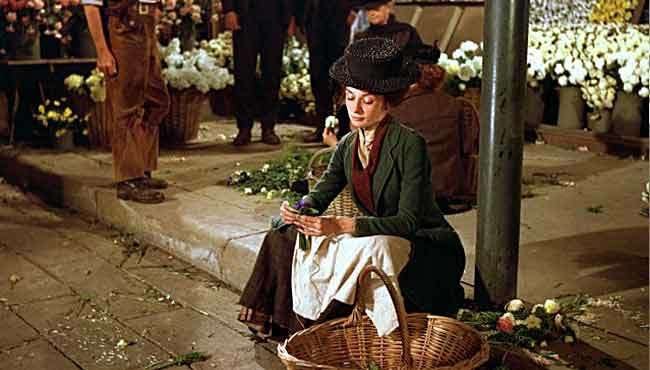
Defenders of “an historic occasion” might point out that “historic” isn’t the same as “Henry” because the stress falls on the second syllable, and usage history does provide some support for the relevance of this factlet.2 If this is your argument, though, you ought to be prepared to die on the ’ills of “Hawkeye wore an Hawaiian shirt,” “An Hungarian must have stolen my paprika,” and “I believe I just had an hallucination.”
BY ACCIDENT / ON ACCIDENT
The standard choice has long been “by accident” rather than “on accident,” and this remains the case. Some enthusiasts for linguistic change, though, have claimed that “on accident” is gaining ground, especially among younger people, and seem excited about the possibility that “on accident” will one day replace “by accident.”
As someone who often criticizes the proclamations of self-declared sticklers (and will do so in the next entry), it heartens me to be able to join them in chasing the youngsters off our lawns. When I hear “on accident,” I think of a very young person, possibly wearing Huggies, saying, “I paint kitty on assuhdent. I sowwy.”
I might not be able to prevent English and the rest of my culture from aging like Benjamin Button, but I don’t have to like it.
CAN / MAY
You might remember an uncle who loved to respond with “I don’t know—can you?” if asked, “Can I go to the bathroom?” He would then smile and wait to be congratulated on his mastery of asking permission with “may” and indicating capacity with “can.”
I had a teacher who enjoyed humiliating six-year-olds with this distinction as they stood before her bending their knees and shifting their weight from foot to foot. I remember thinking that she was cruel—and also that she wasn’t good at paying attention to how people talked.
It’s of course fine to use “may” for permission, but educated speakers have been using “can” for the same purpose for a long time. In some circumstances, I would call “can” more advisable.
“Mom, can Sophie stay and eat pizza with us?”
“Yes, Madison. She may.”
If Sophie overhears this, I wouldn’t blame her for wanting to go home.
DATA
Handbooks used to warn against writing things like “the data is convincing” on the grounds that “data” is the Latin plural of “datum,” but “data” is so useful as a singular that handbooks and editors almost universally agree that it’s fine to treat it as one, as an elliptical form of “body of data.” Correcting “the data is convincing” to “the data are convincing” isn’t necessary.
You can use the plural verb in your own writing if you like, though, and might be able to do so with panache if you’re wearing a monocle or pince-nez. I might even become a subscriber.
EMPATHY
A sometimes useful word that has been fetishized. There is nothing wrong with sympathy or pity, and using “empathy” ad nauseam3 can make it seem that you have delusions of telepathy. Save “empathy” for when you’re really feeling it.
EPICENTER
Take care when using earthquake metaphors in a positive sense. I would avoid writing things like “The Sackville-Bessette neighborhood is the epicenter of cultural life in the city.”

“Epicenter” can be used in a positive sense if you mean to cast some kind of disruption in a positive light. If you want to describe Dresden as an epicenter of German Expressionism, for example, then rattle the ground as it pleases you.
IMPACTFUL
IRREGARDLESS
Not a word you’ll find a need for unless you’re being funny, but also not a reason to be infuriated. Save your fury for when Forbes uses “disruptor” spelled with an “o” to praise someone who is terrible.
JUDGEMENT / JUDGMENT
Because word-formation patterns should trump brevity, I wish that the preferred American spelling were “judgement” with an “e.”
But it isn’t. We Americans are stuck with “judgment.” I am thankful for “labor” and “armor,” though, and thankful that Aeroplane! is not the name of a movie by the Zucker brothers, and thankful that I don’t have to write, “There’s a tiger in the theatre.”
LIGHTENING
Truly sad as a cause of death.
LOL
A potential pitfall for those of an age who use it to mean “lots of love.” Consider giving a heads-up to relatives you fear might send a text reading, “I was so sorry to hear about Albert. lol.”
THE REASON . . . IS BECAUSE
The first few times I assigned students a causal-argument paper, I was inundated with “the reason . . . is because.”
The main reason for the 2008 financial crisis was because of the socialization of risk.
The main reason for the increase in the proportion of deaths caused by cancer is because of increased life expectancy.
Pairing the word “reason” with “because” frequently creates a redundancy, as there is no reason to say that the reason is the cause. The two sentences above can be fixed like so:
The main reason for the 2008 financial crisis was the socialization of risk.
The main reason for the increase in the proportion of deaths caused by cancer is increased life expectancy.
Sometimes, as with these two revisions, omitting “because of” does the trick. Other times, you’ll need to replace “because” with “that” or to omit “the reason.”
Redundant: The reason I am eating is because I am hungry.
“Because” Fix: The reason I am eating is that I am hungry.
“The Reason” Fix: I am eating because I am hungry.
The adamantly terse are likely to glare at “The reason I am eating is that I am hungry” given that the briefer “because” option is available. The longer version can do fine work, though, if said veeerrry slooowwwly to someone who has just asked you an inane question.
THAT / WHICH
A strict distinction between these two words is maintained by a cadre of American editors who have infiltrated prominent institutions like The New Yorker and The Associated Press. It’s the product of what amounts to a poorly played game of telephone. A regrettable curiosity.
UTILIZE
Usually used needlessly.
YEET
More a wink than a direct signifier. Sometimes seems to have the sense of “I think I might be having some kind of fit,” sometimes “This object is burning my hand.”
Adding “ir-” to “regardless” ought to mean “without without regard,” meaning the opposite of what’s intended. I urge you, though, not to assume that logic always plays well with language. In English, “ravel” equals unraveling, and extraordinarily successful people can “rise” like meteors.
I sometimes still hear this in contemporary British usage, and not only in working-class accents, applied to words other than “historic,” especially when the “h” sound is partly (but not entirely) swallowed in initial unaccented syllables. I recently heard a London-born, Oxford-educated English actor referring to a hypothetical person as “an hysteric” on an American TV series. On the other side of things is The Chambers Dictionary, which held almost two decades ago that “an” was used only “rarely” before “an unstressed syllable beginning with a sounded h.”
I’m using the term literally here.
Hilarious. But a quick note on “Yeet” (which I remain unwilling to grant the dignity of a place in the dictionary): my son (born in 2000) and his peers use it, not as an exclamation, but as a verb meaning something like “leave quickly”.
This was a fun read, and I agree of course on all points.
One (tangential) note: although most native speakers would indeed avoid caveman speak when referring only to themselves, they frequently revert to the language of Ugg when including another person in the sentence. Example: "Me and Dave like soapy IPAs."
The error is then reversed when the speaker and friend become objects: "The soapy IPAs were drunk by Dave and I."
These particular constructions have become so prevalent in filmed drama that I believe they've created a feedback loop. At first, they were used simply to represent the speech of people who didn't know any better. Then, a broader segment of the audience heard them used repeatedly on TV and assumed they must be correct, so they adopted them in real life. Now, writers are often reluctant to use the correct construction in case it makes their characters sound insufferably posh. Perhaps some of them don't even appreciate the error themselves.
Whatever the reason, I'm now subjected to the pain of hearing it almost every day.